
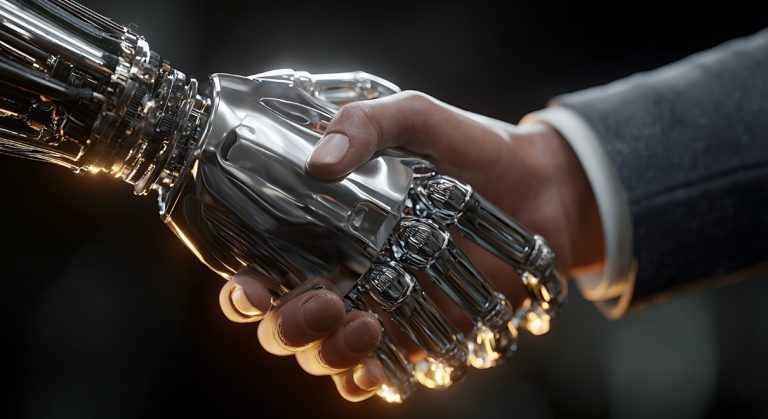
Technology is transforming manufacturing, but people remain at the heart of production.
The manufacturing industry is entering a new era. Automation, robotics, and artificial intelligence are becoming increasingly common on production floors, changing how products are made and how employees perform their daily responsibilities.
While machines are designed to improve speed, precision, and efficiency, the success of modern manufacturing still depends on the people working alongside them.
The future of manufacturing isn’t about replacing workers with technology. It’s about creating an environment where human skills and advanced technology work together to achieve better results.
Here are three ways human-machine collaboration is reshaping the production floor.
Automated equipment can handle repetitive tasks, maintain consistent production speeds, and reduce certain types of human error. This allows manufacturers to increase output while improving consistency and efficiency.
However, technology still requires human oversight.
Production employees monitor equipment, identify potential issues, perform quality checks, and respond when unexpected challenges arise. Their experience, judgment, and problem-solving abilities remain essential to keeping operations running smoothly.
The most successful production environments recognize that machines and people bring different strengths to the table. When those strengths work together, businesses can achieve higher productivity without sacrificing quality.
As manufacturing technology advances, the skills required on the production floor are evolving.
Today’s production workers are increasingly expected to operate alongside automated systems, follow digital processes, and adapt to changes in equipment and workflows.
While technical knowledge is important, qualities such as willingness to learn, attention to detail, teamwork, and adaptability are becoming just as valuable.
For manufacturers, this means looking beyond traditional job experience and recognizing the potential of employees who can grow with the company.
Investing in adaptable people is just as important as investing in advanced equipment.
A workforce that embraces change helps businesses introduce new technology more smoothly while maintaining productivity and operational stability.
That’s the knowledge-transfer problem in a nutshell, it’s not primarily a growth problem, it’s a succession problem. And it’s already visible in real numbers: 415,000 manufacturing job openings sat unfilled as of June 2025, a level that’s held roughly steady as a “structural rather than cyclical” issue for years. Left unaddressed, Deloitte estimates the shortfall could cost the economy as much as $1 trillion in output in 2030 alone. cargoson
Even in highly automated facilities, people remain the foundation of a successful operation.
Machines can perform programmed tasks, but they cannot replace the value of strong communication, teamwork, accountability, and human judgment.
Employees play a critical role in maintaining workplace safety, identifying opportunities for improvement, and supporting one another through operational challenges.
As production environments become more advanced, building a dependable and engaged workforce becomes even more important.
Technology may change the way manufacturing operates, but the people behind the process are what make long-term success possible.
As manufacturers continue adopting new technologies, having the right people in place is essential. Finding dependable, adaptable employees who can support changing production needs can make a meaningful difference in maintaining efficiency and meeting business goals.
That’s where the right staffing partnership becomes valuable.
At Sermavica LLC, we’re a bilingual, family-owned and operated staffing agency that understands the importance of people in every production environment.
We believe staffing is more than filling open positions. It’s about building lasting relationships, understanding each company’s unique needs, and connecting businesses with reliable individuals who are ready to contribute.
Our personalized approach, bilingual communication, and commitment to ongoing support help us serve both our clients and employees with the attention and respect they deserve.
Technology is shaping the future of manufacturing. Let Sermavica help you find the people who will move it forward.
Ready to strengthen your production team?
Sermavica LLC. has been providing staffing services and temporary employment opportunities, from business owners in search of employees, to candidates in search of employment.