
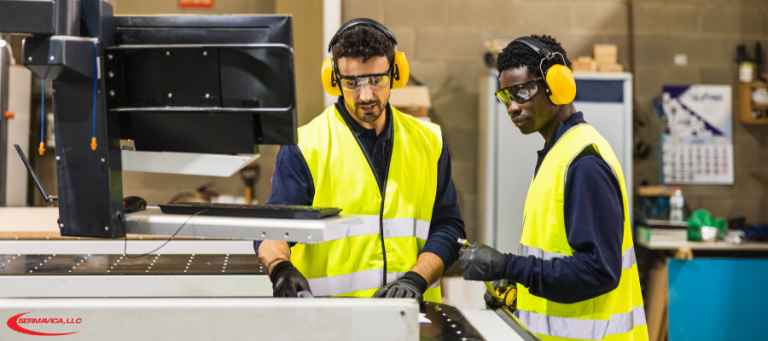
The U.S. manufacturing sector enters 2026 with mixed but more optimistic signals compared to 2025. Employment remains around 12.6 million workers, largely stable after last year’s losses.
After a weak 2025 (with over 100,000 jobs lost), early 2026 shows slight recovery:
Additionally, key indicators like the Manufacturing PMI have returned to expansion territory (>50), signaling a rebound in industrial activity.
Wages and Productivity: Stability Under Pressure.
Wages continue to grow, but at a more moderate pace (around 3–3.7% annually), reflecting a more cautious labor market. At the same time, productivity keeps rising due to automation, allowing companies to maintain output without significantly increasing headcount.
Despite slower hiring, the structural issue remains talent availability. The industry could face 1.5 to 2 million unfilled roles over the next decade, driven by retirements and a lack of technical skills.
This means that even with slower job growth, finding qualified candidates is still a major challenge.
What Does This Mean for Companies?
The market is shifting:
Our Role as a Staffing Partner
In 2026, the challenge is not just hiring—it’s hiring smarter and faster.
As a staffing partner, we help companies adapt to this evolving landscape by connecting them with qualified talent in an increasingly competitive market.
Sermavica LLC. has been providing staffing services and temporary employment opportunities, from business owners in search of employees, to candidates in search of employment.